At a Glance

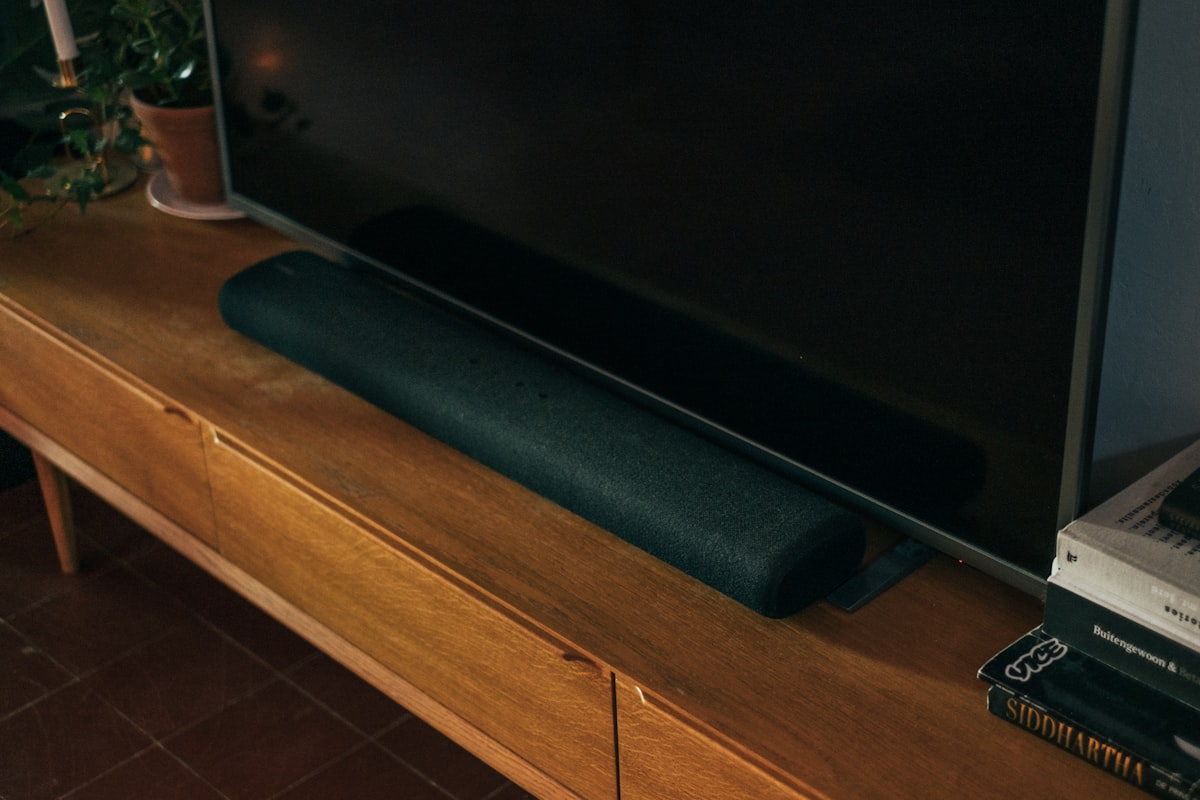
Every TV sold today has speakers that were designed as an afterthought. Manufacturers pour their budgets into panel technology and thinness, and the speakers get whatever space is left — which is almost none. The result is audio that sounds like someone talking through a cardboard tube.
A soundbar fixes this immediately. Not eventually, not with tweaking — the moment you plug it in, everything sounds dramatically better. The question is which one, and whether you need to spend $800 or if $300 gets you there.
For most living rooms, $300 is more than enough. Here are three soundbars worth buying in 2026.
Best Value: Samsung HW-B750D
Price: ~$230 | Channels: 5.1 | Subwoofer: Wireless, included
The Samsung HW-B750D is the soundbar that RTINGS consistently recommends as the best under $300, and after looking at the specs it is easy to see why. You get a 5.1-channel system with a wireless subwoofer for around $230. That is a lot of speaker for the money.
The built-in center channel handles dialogue well, which matters more than you think — most soundbar complaints boil down to “I can’t hear what people are saying.” Samsung’s Adaptive Sound feature analyzes the content and adjusts the mix, boosting voices during dialogue scenes and widening the soundstage during action sequences.
Dolby Audio and DTS Virtual:X are both supported. No Dolby Atmos at this price, but Virtual:X does a reasonable job of simulating height channels. The wireless subwoofer handles the low end so the bar itself does not have to strain. Connection options include HDMI ARC, optical, and Bluetooth.
If you want a Samsung TV ecosystem integration (SmartThings, SpaceFit Sound calibration), this is a no-brainer. But it works perfectly well with any TV brand.
Best Compact: JBL Bar 300
Price: ~$280 | Channels: 5.0 | Subwoofer: None (built-in bass)
The JBL Bar 300 takes a different approach — no external subwoofer at all. Instead, JBL packs five channels and Dolby Atmos support into a single bar that is compact enough to fit under most TVs without blocking the IR sensor.
MultiBeam technology uses multiple drivers angled to bounce sound off your walls, creating a wider soundstage than the bar’s physical size suggests. It works better in smaller rooms where the walls are closer, and less well in open-plan spaces where there is nothing to bounce off of.
The bass is surprisingly decent for a subwoofer-less design. JBL knows how to tune low end. It will not rattle your floor, but it fills out movie explosions and music bass lines adequately. If you listen to a lot of bass-heavy music, the Samsung with its dedicated sub is a better pick. For movies and TV, the JBL is perfectly fine.
The real selling point is simplicity. One box, one power cable, one HDMI connection. No wireless sub to find a spot for, no pairing issues, no extra power outlet needed. For apartments or bedrooms, this matters.
Best If You Can Stretch: Sonos Beam Gen 2
Price: ~$450 (often on sale for ~$350) | Channels: 5.0 | Subwoofer: None (optional add-on)
The Sonos Beam Gen 2 technically exceeds the $300 budget at list price, but it frequently drops to $350 or below during sales, and if you can catch it there, it is the best soundbar in this general price range.
Sonos does Dolby Atmos, has excellent dialogue clarity, and — critically — integrates into the Sonos ecosystem for multi-room audio. If you already have Sonos speakers elsewhere, the Beam becomes part of that system. AirPlay 2 support means it also works seamlessly with Apple devices.
The trueplay tuning (via the Sonos app on iOS) calibrates the sound to your specific room, which makes a noticeable difference. The bar itself sounds fuller than its size suggests, though it lacks the deep bass that a dedicated subwoofer provides. You can add a Sonos Sub later if you want, but that is another $800.
For pure value at $300, the Samsung wins. For the best overall experience at a slight premium, the Sonos is hard to beat.
What About Dolby Atmos?
Dolby Atmos in a soundbar is not the same as Atmos in a proper 7.1.4 speaker setup. Soundbars simulate height channels by bouncing sound off your ceiling, which works in rooms with flat ceilings under 9 feet and falls apart in vaulted or open spaces.
At this price range, Atmos is a nice-to-have, not a requirement. The JBL and Sonos support it. The Samsung does not. In practice, the difference is subtle on most content. Prioritize dialogue clarity and overall sound quality over Atmos support.
Setup Tips
- Use HDMI ARC or eARC instead of optical if your TV supports it — it carries more audio formats and lets your TV remote control the soundbar volume
- Turn off your TV’s built-in speakers in the TV settings — some TVs play both by default, which sounds terrible
- Enable dialogue enhancement if the soundbar has it — Samsung calls it “Voice Enhance,” Sonos has “Speech Enhancement”
- Place the soundbar directly below the TV, not inside a cabinet — enclosed spaces muffle the sound and kill the virtual surround effect
- Run room calibration if available — both Samsung and Sonos have calibration features that meaningfully improve sound quality
The Bottom Line
The Samsung HW-B750D at ~$230 is the value champion. You get 5.1 channels and a wireless subwoofer for less than most 2.1 systems. The JBL Bar 300 is the pick for people who value simplicity and compact design. The Sonos Beam Gen 2 is the stretch buy for anyone who wants the best sound quality and multi-room potential.
Any of these three will make you wonder why you listened to your TV’s built-in speakers for so long.