At a Glance
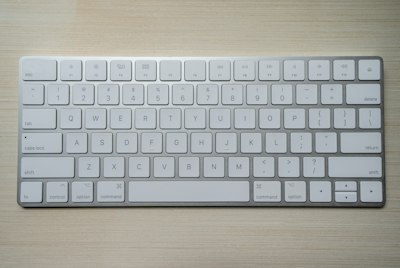
You spent two hundred dollars on a mechanical keyboard. You customized the switches. You might even have artisan keycaps. And then you reach for a fifteen-dollar mouse that came free with a monitor and wonder why your wrist aches by Friday.
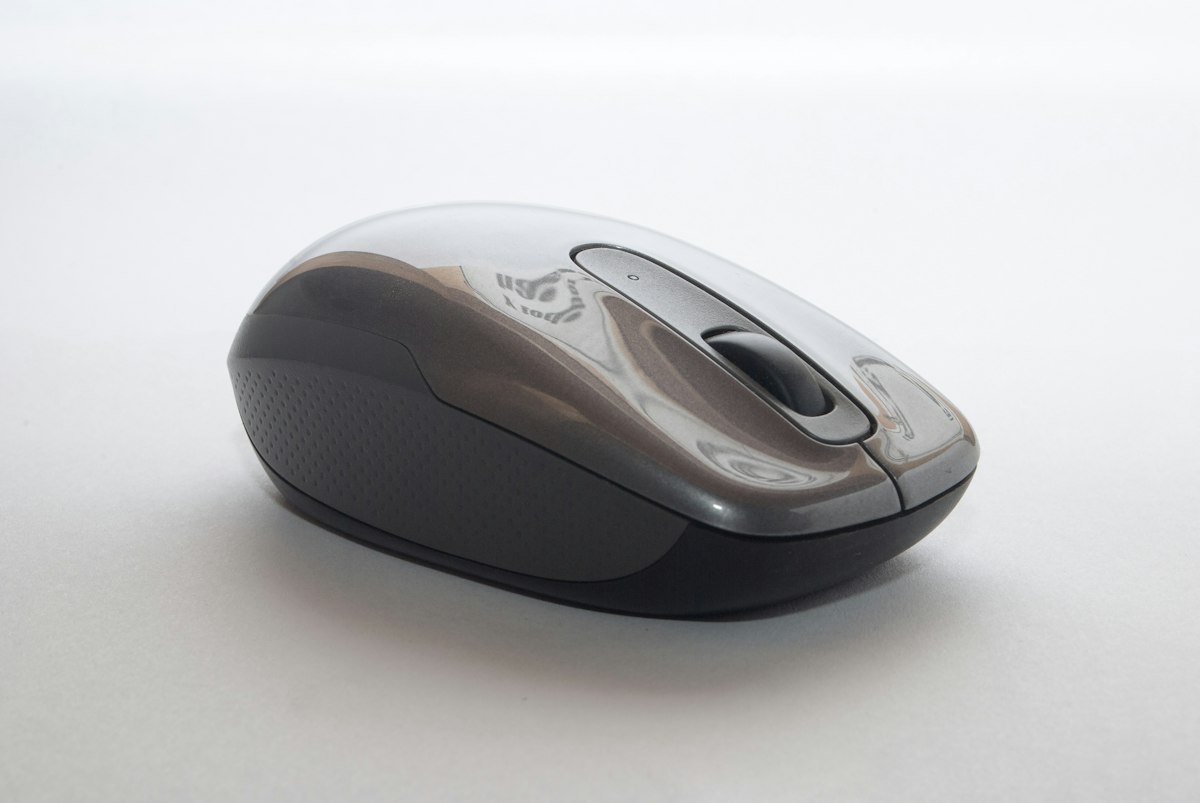
The mouse is the most neglected part of a programmer’s desk setup. It should not be. If you spend hours a day navigating code, reviewing pull requests, and dragging around terminal panes, your pointing device matters. Here are five options that solve different problems.
Best All-Around: Logitech MX Master 3S
Price: ~$100 | Connection: Bluetooth / USB-C receiver | Weight: 141g
The Logitech MX Master 3S is the default recommendation for a reason. It is not technically a vertical mouse, but the sculpted shape puts your hand at a slight angle that reduces pronation compared to a flat mouse. The MagSpeed scroll wheel is fast enough to fly through a thousand-line file and precise enough to stop on a single line.
Three devices can pair simultaneously and you switch between them with a button on the bottom. If you bounce between a work laptop and a personal machine, this feature alone justifies the price. The thumb wheel handles horizontal scrolling, which is surprisingly useful in wide terminals and spreadsheets.
The quiet click is genuinely quiet. Your coworkers on a video call will not hear it. Neither will a sleeping kid in the next room.
Best Vertical Mouse: Logitech Lift
Price: ~$70 | Connection: Bluetooth / USB receiver | Weight: 125g
If your forearm and wrist hurt, the problem is probably pronation — the twisting motion that a flat mouse forces on your wrist. The Logitech Lift puts your hand in a handshake position at 57 degrees, which is enough to relieve the strain without feeling alien.
The Lift is deliberately small. Logitech makes a larger vertical mouse (the MX Vertical), but for most hands, the Lift’s compact shape is actually more comfortable because your hand rests on it rather than gripping it. It comes in left-handed and right-handed versions, which is rare for vertical mice.
The learning curve is about two days. You will overshoot targets on day one. By day three, you will not want to go back. The reduced wrist strain is that noticeable.
Best Trackball: Logitech ERGO M575
Price: ~$50 | Connection: Bluetooth / USB receiver | Weight: 145g
A trackball eliminates wrist movement entirely. Instead of pushing a mouse across a desk, your thumb rolls a ball. The Logitech ERGO M575 is the easiest way to try this concept without spending a hundred dollars on the experiment.
The argument for trackballs is simple: your arm does not move. At all. For people with shoulder pain or limited desk space, this is a real solution, not a gimmick. A trackball also works on any surface — glass, a couch armrest, a tiny airplane tray table.
The argument against trackballs is precision. Pixel-level work is harder with a thumb ball than with a full mouse. But if your job is mostly text editing and navigation, you do not need pixel precision. You need to click the right tab, the right line, the right button. A trackball does that fine.
A single AA battery lasts about two years. That is not a typo.
Best Premium Trackball: Kensington SlimBlade Pro
Price: ~$110 | Connection: Bluetooth / USB-C / USB receiver | Weight: 268g
The Kensington SlimBlade Pro uses a large 55mm ball controlled by your fingertips rather than your thumb. This is a different philosophy than the M575 — you get more precision and a different hand position, with your fingers draped over the ball and your wrist completely neutral.
The large ball doubles as a scroll wheel. Twist it and you scroll. This takes about a week to feel natural, but once it does, it is faster than a scroll wheel because you can modulate speed with your wrist.
The build quality is serious. The base is heavy enough to stay planted. The ball itself is smooth glass. It feels like a tool that belongs on a desk, not a gadget that will end up in a drawer.
If you have tried a thumb trackball and liked the concept but wanted more control, this is the upgrade path.
Best Lightweight Traditional: Razer DeathAdder V3 HyperSpeed
Price: ~$100 | Connection: 2.4 GHz HyperSpeed wireless / USB-C | Weight: 55g
Not everyone wants an ergonomic experiment. Some people just want a regular mouse that is light enough to not cause fatigue. The Razer DeathAdder V3 HyperSpeed weighs 55 grams. That is less than half the weight of an MX Master. For fast, light movements, less weight means less strain on your wrist and shoulder over the course of a day.
The DeathAdder shape has been around for over a decade because it works. The right side has a slight flare that supports your ring finger. The hump sits slightly toward the back, which encourages a relaxed grip rather than a claw grip. USB-C charging gives you up to 100 hours of battery life.
Yes, it is marketed as a gaming mouse. Ignore that. The 26,000 DPI sensor is overkill for code, but the polling rate and tracking accuracy mean the cursor goes exactly where you expect it to, every time. No acceleration, no jitter, no guessing.
Which One Should You Buy?
If nothing hurts yet: The MX Master 3S is the safe choice. It is comfortable, feature-rich, and works across multiple machines.
If your wrist already hurts: Start with the Logitech Lift. The vertical position relieves pronation strain faster than anything else on this list.
If your shoulder or whole arm hurts: Try a trackball. The M575 is cheap enough to be an experiment. If you commit, upgrade to the SlimBlade Pro.
If you want the lightest possible mouse: The DeathAdder V3 HyperSpeed at 55 grams eliminates fatigue through sheer weightlessness.
The best ergonomic mouse is the one that addresses your specific pain point. If you do not have a pain point yet, consider that prevention is cheaper than physical therapy. Pick one of these now, before your wrist makes the decision for you.